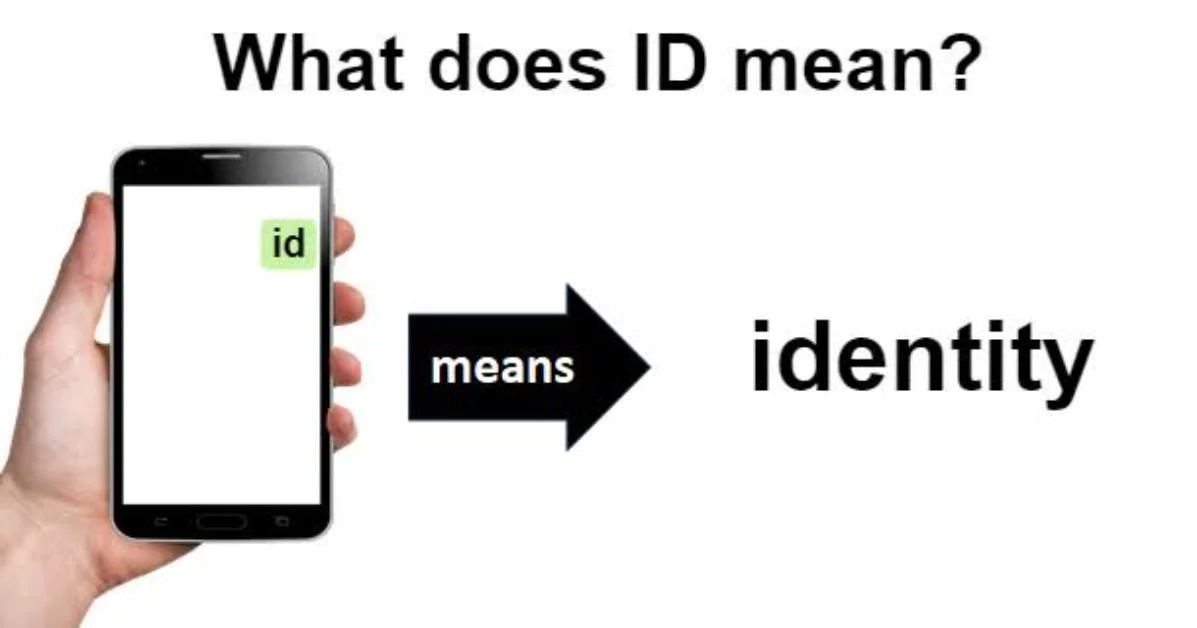
When you see “ID” in a text message or online chat, its meaning can depend on the conversation. In many situations, ID means “identification” or “identity,” especially when someone asks for an ID, username, or account information.
However, in casual texting, lowercase “id” can sometimes be used as a short form of “I don’t,” although this use is less common and can be confusing.
People often search for the ID meaning in text because abbreviations can have different meanings across messaging apps, social media, gaming, and everyday conversations. Understanding the context is the easiest way to know what someone means.
Whether you saw “ID” on WhatsApp, Instagram, TikTok, Snapchat, or in a private message, this guide explains its common meanings, examples, related slang, and ways to reply naturally.
What Does ID Mean in Text & Chat?
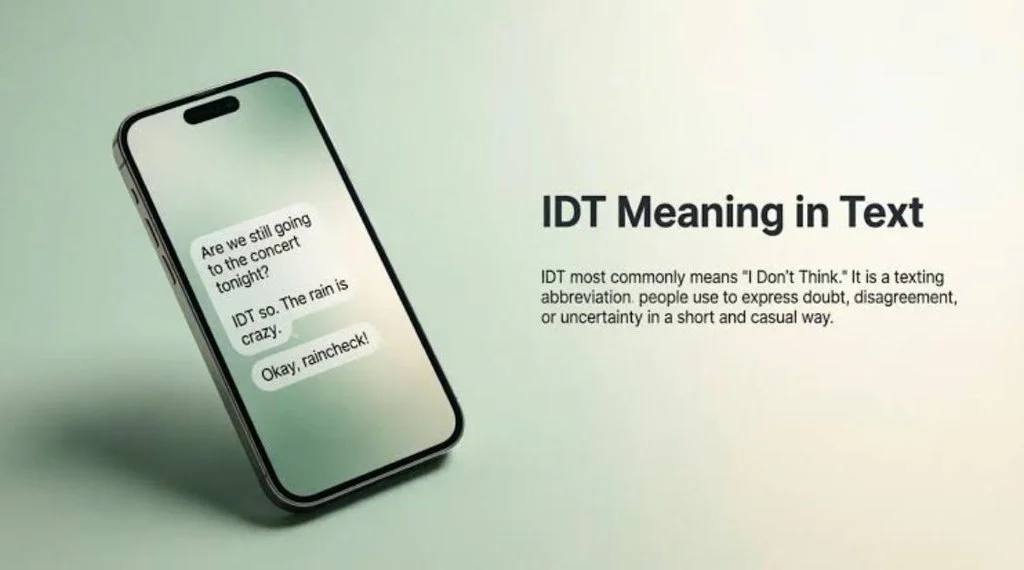
The most common ID meaning in text and chat is “identification” or “identity.” People may use ID when talking about a username, account number, identification document, or another way of identifying a person or account.
For example, someone might write:
- “Send me your ID.”
- “What’s your Instagram ID?”
- “I need your ID to complete the form.”
- “Do you know his user ID?”
The exact meaning depends on the topic. If people are discussing social media, ID may refer to a user’s account or profile name. If they are discussing travel, school, work, or official documents, it may mean an identification card or another form of identification.
In casual internet conversations, you may also see “id” used as an informal shortening of “I don’t.” For example:
- “id know what happened.”
- “id think so.”
- “id want to go there.”
This version is much less standard than abbreviations such as IDK, which means “I don’t know.” Because of this, readers may need to use the surrounding sentence to understand the intended meaning.
Quick meaning guide
- ID = Identification — the most common general meaning.
- ID = Identity — often used for a person or online account.
- ID = User ID — a number or name that identifies an account.
- id = I don’t — an informal texting use that appears occasionally.
So, when someone uses “ID,” don’t assume there is only one definition. The words around it usually reveal the intended meaning.
Full Form, Stands For & Short Meaning of ID
The most widely recognized full form of ID is “identification.” It can also refer to “identity,” depending on the situation. In digital communication, ID is often used as a short label for something that identifies a person, profile, account, record, or object.
For example, a website may ask for a user ID. This is usually a unique name, number, or combination of characters connected to an account. Similarly, a company may use an employee ID to identify workers in its internal system.
Common full forms and meanings
- ID = Identification
- ID = Identity
- User ID = User Identification
- Account ID = Account Identification
- ID card = Identification card
- ID number = Identification number
In informal texting, lowercase “id” can have a completely different meaning. Some people use it as a shortened form of “I don’t.” For example, “id care” may be intended to mean “I don’t care.” However, this style is not universal.
A more familiar abbreviation is IDK, which means “I don’t know.” This is important because people can easily confuse “ID” with “IDK” when reading a short message.
Short meaning of ID
In simple terms, ID usually means something that identifies a person, account, or thing.
For example:
“Send me your ID.”
This could mean “Send me your identification” or “Send me your account/user ID,” depending on the conversation.
If the message is very casual, check the sentence before deciding what “ID” means.
Origin, History & First Known Use of ID
The abbreviation ID comes from the word “identification,” which is related to the idea of identifying or recognizing someone or something. The shortened form became useful because “identification” is a long word that appears frequently in official documents, records, forms, and everyday communication.
Over time, ID became common in phrases such as:
- ID card
- ID number
- user ID
- employee ID
- customer ID
- student ID
- account ID
As computers and online services became more common, the abbreviation gained another important role. Digital systems needed short labels for accounts and users, so terms such as user ID and login ID became widely used.
The internet also changed how people communicate. Short forms became common in emails, forums, instant messages, gaming communities, and social media. This created new informal uses and made abbreviations easier to type.
However, the meaning of “ID” in casual chat is not always the same as its technical meaning. Someone might use ID to talk about an online username, while another person might use it to mean an official identification document.
There is also a less common texting use of lowercase “id” for “I don’t.” This is mainly an informal typing shortcut rather than the traditional meaning of the abbreviation.
A simple timeline
- Earlier usage: Identification and identity-related terms.
- Administrative use: ID cards, numbers, and records.
- Digital era: User IDs and account IDs became common.
- Social media era: People began using ID for profiles and accounts.
- Modern texting: Informal lowercase uses can appear in casual messages.
Because language changes online, context remains the best clue.
How People Use ID in Daily Conversations
People use ID in many different types of conversations. The meaning often becomes clear from the words surrounding it.
In everyday life, ID commonly refers to an identification document. For example, a person may need to show an ID at an airport, hotel, school, workplace, or other location.
In online conversations, the meaning often changes slightly. Someone may ask for an “ID” when they want a social media username, gaming account name, or another account identifier.
Examples in daily conversations
- At work: “Send me your employee ID.”
- At school: “What’s your student ID?”
- Online: “What’s your gaming ID?”
- Social media: “Drop your Insta ID.”
- Shopping: “Please provide your customer ID.”
- Travel: “Don’t forget to bring your ID.”
In a casual chat, someone could also type:
- “idk what you mean.”
- “id care about that.”
- “id think that’s right.”
The first example contains IDK, not simply ID. This distinction matters because abbreviations can look similar when people type quickly.
Quick chat examples
- “What’s your TikTok ID? 😊”
- “I need your customer ID.”
- “Can you send me your user ID?”
- “Bring your ID tomorrow.”
- “id really want to go.”
The safest approach is to read the entire sentence before interpreting the abbreviation.
ID Meaning Across WhatsApp, Instagram, TikTok & Snapchat
The ID meaning in text can change slightly across social media platforms, although the basic idea of identification remains the same.
On WhatsApp, people may use “ID” when discussing a contact, account, group, or another identifier. However, WhatsApp users are more likely to simply share a phone number or contact rather than call it an ID.
On Instagram, “ID” can refer informally to someone’s account or username. For example:
- “What’s your Insta ID?”
- “Send me your Instagram ID.”
Here, the person usually wants the account name or profile information.
On TikTok, users may similarly say “TikTok ID” when referring to an account or username. The term may be used casually even when the platform uses a more specific official label.
On Snapchat, “ID” can refer to an account identifier or username in informal conversation.
Platform examples
- WhatsApp: “Send me your ID so I can find your account.”
- Instagram: “What’s your Insta ID?”
- TikTok: “Drop your TikTok ID.”
- Snapchat: “What’s your Snap ID?”
The important point is that people do not always use “ID” according to a strict technical definition. Online communities often use familiar words loosely.
If someone asks for your “ID” on social media, they may simply want your username or profile information.
Different Meanings of ID in Other Fields
The abbreviation ID is used far beyond texting and social media. Its meaning can change significantly depending on the field.
Technology
In technology, ID often means an identifier.
- User ID
- Object ID
- Device ID
- Account ID
- Session ID
These identifiers help computer systems distinguish one item or user from another.
Government and official documents
In everyday official language, ID usually means identification.
Examples include:
- National ID
- ID card
- Photo ID
- Employee ID
Education
Schools and universities may give students a unique student ID. This can be used for records, library access, exams, or online systems.
Business
Companies commonly use customer IDs, employee IDs, order IDs, and invoice IDs.
Medicine
In medical contexts, “ID” can have specialized meanings depending on the subject. For this reason, readers should not automatically interpret every occurrence as “identification.”
Psychology
In psychology, id can refer to a concept associated with psychoanalytic theory. This is completely different from the texting meaning.
Gaming
Gamers may use “ID” for player IDs, user IDs, game IDs, or account identifiers.
Because ID has many meanings, context is especially important outside casual messaging.
Common Confusions, Mistakes & Wrong Interpretations
One of the biggest problems with ID in text is that a short abbreviation can have several meanings. People sometimes assume the wrong definition because they read the abbreviation without considering the surrounding words.
A common confusion is between ID and IDK.
- ID = identification/identity
- IDK = I don’t know
For example:
“IDK what happened.”
This does not mean “identification.” It means “I don’t know what happened.”
Another possible confusion involves lowercase “id.” Some people use it to mean “I don’t,” but others may interpret it as “ID” or simply assume the person made a typing mistake.
Common mistakes
- Assuming ID always means identification.
- Confusing ID with IDK.
- Treating “id” as a universal abbreviation for “I don’t.”
- Ignoring the sentence’s context.
- Assuming social media ID always means a technical account number.
How to avoid confusion
Look at the words before and after the abbreviation.
For example:
- “Show me your ID.” → likely identification.
- “What’s your user ID?” → account identifier.
- “IDK.” → I don’t know.
- “id care.” → possibly “I don’t care,” depending on the writer.
If you’re still unsure, asking the person what they mean is usually the easiest solution.
Similar Terms, Alternatives & Related Slang
There are many abbreviations and terms related to ID, especially in online communication. Knowing these can make texting easier to understand.
Identification-related terms
- ID — identification or identity.
- User ID — identifier for an online account.
- Username — name used to identify an online account.
- Handle — a person’s public username, especially on social platforms.
- Account name — the name associated with an account.
- Profile — a user’s online account page.
Related texting abbreviations
- IDK — I don’t know.
- IDC — I don’t care.
- IMO — in my opinion.
- IRL — in real life.
- DM — direct message.
- BTW — by the way.
- FYI — for your information.
These abbreviations are not interchangeable with ID. Each one has its own meaning.
Helpful internal linking suggestions
If you’re building a website about texting abbreviations, you can naturally link ID meaning in text to related pages such as:
- IDK Meaning in Text
- IDC Meaning in Text
- IMO Meaning in Text
- IRL Meaning in Text
- DM Meaning in Text
- BTW Meaning in Text
- FYI Meaning in Text
These links can help readers understand similar abbreviations without interrupting the flow of the article.
Examples of ID in Real Chat Situations
The meaning of ID becomes easier to understand when you see it in realistic conversations.
Example 1: Social media
Alex: “What’s your Instagram ID?”
Sam: “It’s @samwrites 😊”
Here, ID means the person’s Instagram account or username.
Example 2: Work
Manager: “Please add your employee ID to the form.”
Employee: “Sure, I’ll send it now.”
Here, ID clearly means an employee identification number.
Example 3: School
Student: “What’s my student ID again?”
Friend: “Check your school portal.”
In this situation, ID refers to a student identifier.
Example 4: Gaming
Player 1: “Send me your player ID.”
Player 2: “Sure! Give me a second 🎮”
Here, ID means the account or player identifier used by the game.
Example 5: Casual texting
Alex: “Are you coming tonight?”
Sam: “id think so.”
Here, lowercase “id” may be intended to mean “I don’t,” although this style can be unclear.
Quick examples
- “Send me your ID.”
- “What’s your user ID?”
- “I forgot my ID number.”
- “Drop your Insta ID.”
- “What’s your player ID? 🎮”
The surrounding conversation tells you which meaning is intended.
How to Reply When Someone Says ID
Your reply to “ID” depends on what the person is asking for. If someone asks for your identification, you can respond appropriately. If they want your social media account, you can send your username instead.
If they ask for your identification
You could say:
- “Sure, what type of ID do you need?”
- “Do you mean my ID number?”
- “I’ll send it shortly.”
If they ask for your social media ID
You could reply:
- “Sure, my Instagram ID is @example.”
- “You can find me by searching my username.”
- “Here’s my profile 😊”
If you don’t understand
A simple clarification works well:
- “Which ID do you mean?”
- “Do you mean my username?”
- “Are you asking for my account ID?”
This is especially useful because “ID” can mean different things.
Friendly responses
- “Sure! Which ID do you need? 😊”
- “Yep, I’ll send it now.”
- “Do you mean my username?”
- “Here you go!”
There is no single correct reply. The best response depends on what the other person means by ID.
Is ID Still Popular? Trends & Online Usage
Yes, ID remains widely used, especially in technology, official communication, education, workplaces, gaming, and online accounts. Unlike some internet slang that becomes popular for a short time and then disappears, ID has practical uses that keep it relevant.
People continue to see terms such as:
- User ID
- Account ID
- Employee ID
- Student ID
- Customer ID
- Order ID
- Device ID
- Player ID
On social media, people may also casually use “ID” when referring to an account or username. The exact wording can vary from platform to platform.
The informal lowercase “id” meaning “I don’t” is less standardized. Some people may understand it immediately, while others may find it confusing. More established abbreviations such as IDK and IDC are generally easier for readers to recognize.
Why ID remains useful
- It is short and easy to type.
- It works well in technical systems.
- It is commonly used in official documents.
- It identifies online accounts.
- It is familiar across many industries.
- It appears frequently in gaming and digital services.
So, while internet slang changes quickly, ID remains a practical abbreviation with several established meanings.
Frequently Asked Questions
In most situations, ID means identification or identity. It can refer to an identification document, number, username, or account identifier. In some informal chats, lowercase “id” may mean “I don’t.”
What does ID mean on Instagram?
On Instagram, people may use ID informally to mean an account, username, or profile identifier. For example, “What’s your Insta ID?” usually means “What is your Instagram username?”
Does ID mean “I don’t” in texting?
Sometimes. Some people use lowercase “id” as a short form of “I don’t,” but this usage is informal and not universal. Context is important.
What is the difference between ID and IDK?
ID commonly means identification or identity, while IDK means “I don’t know.” They are different abbreviations.
What does user ID mean?
A user ID is a unique name, number, or identifier used to recognize an account or user in a digital system.
What does ID mean in gaming?
In gaming, ID often means a player, account, or user identifier. It may be a number, username, or unique code used to locate an account.
Is ID the same as a username?
Not always. A username can be a type of identifier, but an ID may also be a unique number or system-generated code that other users never see.
Conclusion:
The ID meaning in text usually refers to identification, identity, or an identifier, but its exact meaning depends on the conversation.
On social media, “ID” may casually mean an account or username, while in workplaces, schools, and official situations, it commonly refers to an identification number or document. In some informal texting styles, lowercase “id” can also mean “I don’t,” although this use is less common and may cause confusion.
The easiest way to understand ID is to look at the surrounding words and the platform where it appears. If someone asks for your ID and you’re unsure what they mean, simply ask for clarification.
Understanding these small differences can make online conversations much easier and help you respond with confidence.

Oyner is the creator of DailyWishz, passionate about sharing thoughtful wishes, positive messages, and little moments of joy. He believes the right words can brighten anyone’s day.